“This feels tight here…” (As the individual points to a part of their body when they move).
“There is tightness here when I do this…” (As the individual demonstrates a movement that creates the tightness)
“My muscles are too tight… (As the client scrunches up their face with the effort of trying to overcome the tightness)
Exercise professionals, therapists of any number of disciplines, and physicians hear these phrases frequently from their clients and patients. It’s a verbal report that transcends the ages. So, what does it mean?
What is the client/patient trying to say about the sensation in their body?
This verbal report of tightness is describing a subjective sensation – not a measured property.
Clearly, if they choose to report it, they are interpreting the sensation of tightness as something that is wrong with their body. Especially if it is a sensation they have not felt before.
What are they hoping the trainer, therapist, or doctor will do about it?
What does the client/patient think is happening in their body when they have a sensation and choose the word “tight” to describe it?
The definition of the adjective form of the word “tight” from dictionary.com is:
Fixed, fastened, or closed firmly; hard to move, undo, or open; (2) (of a rope, fabric, or surface) stretched so as to leave no slack; not loose.
(I would add that tightness refers to the inability for a material to lengthen when put under a strain – which can often be quite beneficial. E.g. a rope that is lowering a piano from a third story window, or the wire safety cable on an amusement ride that is swinging you around at 40 miles an hour.)
Is this what the practitioner thinks… that some material of their client’s body is fixated, fastened, already stretched so as to leave no slack (when it should have more slack), or just “not loose”?
The choice to use this word “tightness” frames the conclusion that there is some problem with the materials, or fabric, of the body. They think that maybe the fabric is stuck together, or that some material has lost its elasticity and doesn’t lengthen like it should.
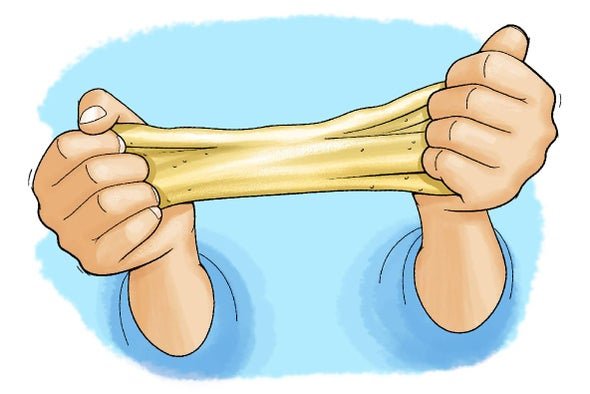
How does the trainer, therapist, or doctor interpret this word – “tight”? – Let alone decide what to do about it? They too may have the idea that there is some problem with the body’s fabric and that the fabric needs to be mechanically manipulated like silly putty, bread dough, or rubber to try and change its consistency – it’s slackness. They will try to unfix, unfasten, or loosen something. Body material names like fascia, connective tissue, muscle knots, and sheaths start getting thrown around and blamed as perpetrators of the dreaded tightness.
If you see a massage therapist maybe they rub the location where the sensation is reported in order to loosen it.
If you see a trainer maybe they stretch the area where the location is reported in order to unfasten it.
If you see a doctor maybe they inject something into the area where the location is reported in order to melt it.